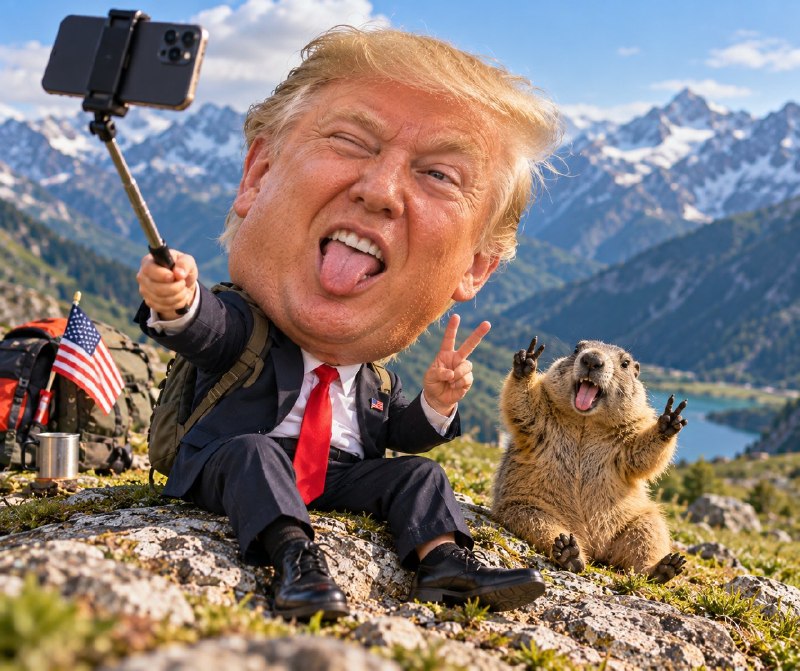
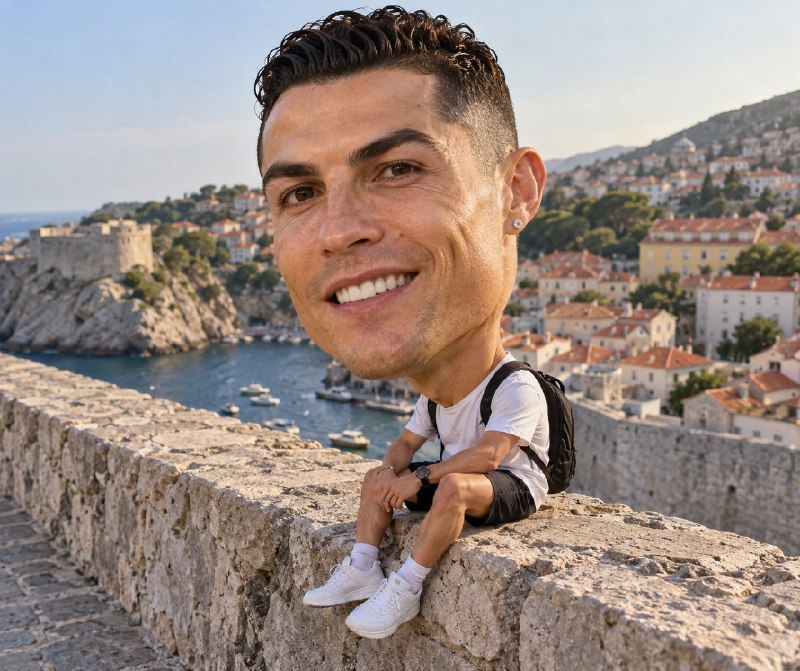
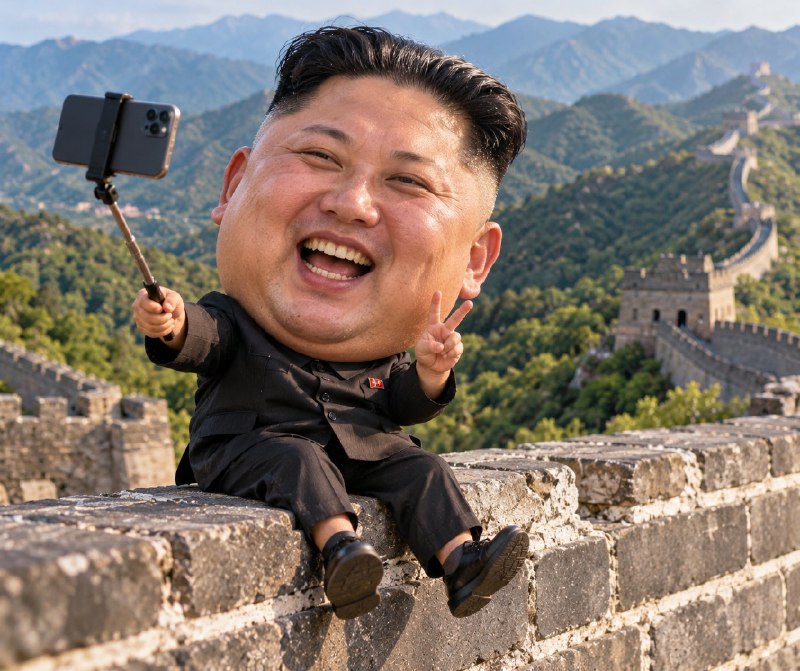
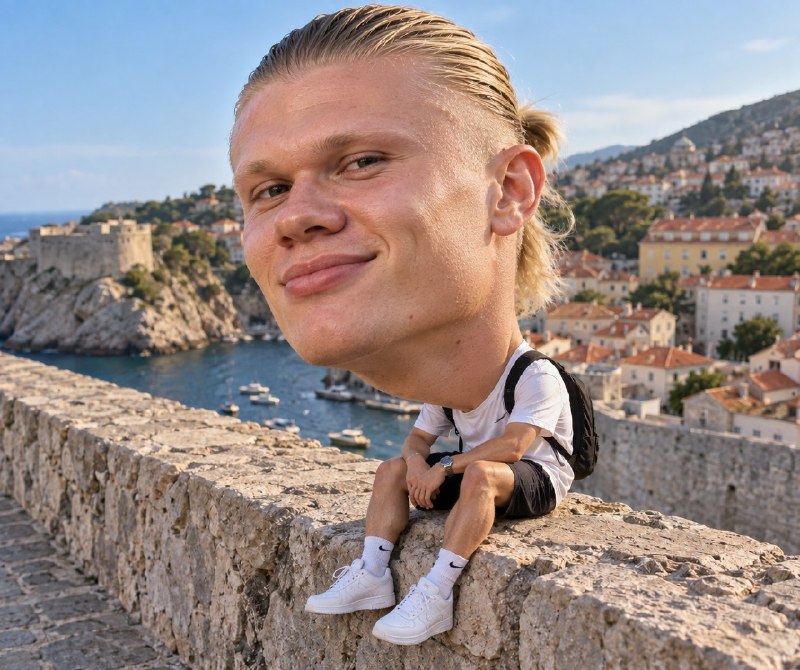
Change only the subject’s head-to-body proportions while preserving identity, surroundings and lighting, with careful neck and shadow transitions.
English translation of the public case notes.
Edit a clear single-person travel photograph into a large-head, small-body portrait while retaining a realistic photographic finish. This local-editing concept suits humorous travel avatars, social covers and light-hearted portrait variations.
Lock the original environment, viewpoint, light, identity and pose before allowing proportion changes. Specify head enlargement and body reduction separately so the exaggeration is controlled. The source recommends giving those amounts explicitly but does not supply numerical values in the public notes.
Pay particular attention to the neck, shoulders, collar and contact shadows. The altered person should still connect naturally to their clothing and the ground.
Avoid cartoon rendering, a replacement background, beauty retouching, a disconnected neck, floating limbs, malformed hands or feet, warped clothing and incorrect grounding. Put the instruction to change only body proportions near the beginning.
Original case notes (Chinese)
🧩 GPT-Image-2|大头旅行照的真实改造
类型:文生图 / 图像编辑。
真正难点在这里:这个案例适合学习照片编辑中的身份保留与比例夸张:只改变人物头身比例,同时锁定环境、光线、姿势和摄影质感。可用于旅行照趣味头像、社交媒体封面和轻幽默人物编辑。
控制逻辑拆开看:
类型:局部编辑
输入:一张单人旅行照片,人物身份、姿势和旅行环境应清晰可见
目标:生成真实摄影质感的超大头小身体旅行肖像
关键词:超大头 / 小身体 / 身份保留 / 真实摄影 / 旅行环境 / 比例变形 / 颈肩过渡 / 阴影一致
重点:先锁定原图环境、视角、光线和身份,再限定只修改人物头身比例,并明确头部放大与身体缩小的范围
约束:避免卡通化、换背景、磨皮美化、断脖子、肢体漂浮、手脚畸形、服装扭曲和错误接地
💡 复刻时抓住三点
• 把“只修改人物比例”提前说明,降低模型误改背景和身份的概率
• 分别给出头部放大倍数与身体缩小比例,让夸张效果可控而不是随机变形
• 专门约束颈部、肩膀、衣领和阴影接触点,保证幽默变形仍像真实照片
#GPTImage2 #OpenAI #AI绘画 #大头旅行照 #写实摄影 #身份保留
Full prompts
Chinese prompt
将输入的单人旅行照片编辑成一张“超大头旅行肖像”,同时保留原图真实的摄影观感。

保持原始环境、地点、相机视角、透视、构图、光线方向、阴影、景深以及人物身份不变。

身体比例变换

只修改人物的比例。

将整个头部、面部和发型一起放大到约为原始尺寸的 1.5×–2×。

将身体、手臂、腿、手、服装和整体身体比例缩小到约为原始比例的 35%–60%,形成明显且幽默的超大头/小身体效果。

头部相对于身体应显得非常夸张地放大,但最终结果仍必须看起来像真实照片,而不是卡通或 3D 角色。

身份与真实感

准确保留人物可识别的身份。

保持原始的:

- 面部结构和比例
- 眼睛、眉毛、鼻子、嘴唇、下颌线和耳朵
- 面部表情
- 视线方向
- 发型和单根发丝
- 自然肤色和真实皮肤纹理
- 毛孔、皱纹、面部毛发和自然瑕疵
- 帽子、耳环、眼镜或其他配饰
- 服装设计、织物纹理、褶皱和材质

不要美化、重新设计、风格化或人为磨皮面部。

姿势与解剖结构

保持人物原有的姿势、手势、身体朝向、动作和观看方向不变。

自然重建放大的头部与缩小的身体之间的过渡,尤其是颈部、肩膀、衣领、上半身和服装区域。

手、手臂、腿、坐姿、站姿以及与地面或周围物体的接触必须保持物理上可信。

保持真实的重量分布、接触点、透视和阴影。

绝对避免:

- 断裂或脱节的脖子
- 悬浮的身体部位
- 扭曲的手或脚
- 多余的手指或肢体
- 重复的身体部位
- 重复的人物
- 变形的服装
- 不自然的解剖结构
- 错误的地面接触

背景

保留输入照片中的真实旅行环境。

植物、道路、建筑、山脉、街道、建筑结构、景观、家具、地面表面以及其他环境元素应与原图保持一致。

不要将背景替换为纯色、图形形状、影棚背景、虚构风景或新发明的地标。

摄影风格

最终图像必须保持 100% 写实,并且令人信服地像一张真实照片。

只使用轻微、柔和的生活方式/旅行摄影调色,同时保留原始光线和氛围。
English prompt
Edit the input single-person travel photograph into an “OVERSIZED HEAD TRAVEL PORTRAIT” while preserving the authentic photographic look of the original image.

Keep the original environment, location, camera viewpoint, perspective, composition, lighting direction, shadows, depth of field, and the person’s identity unchanged.

BODY PROPORTION TRANSFORMATION

Only modify the proportions of the person.

Enlarge the entire head, face, and hairstyle together to approximately 1.5×–2× their original size.

Reduce the body, arms, legs, hands, clothing, and overall body proportions to approximately 35%–60% of their original scale, creating an obvious and humorous oversized-head / tiny-body effect.

The head should feel dramatically oversized compared with the body, but the final result must still look like a real photograph, not a cartoon or 3D character.

IDENTITY & REALISM

Preserve the person’s recognizable identity exactly.

Maintain the original:

- facial structure and proportions
- eyes, eyebrows, nose, lips, jawline, and ears
- facial expression
- gaze direction
- hairstyle and individual hair strands
- natural skin tone and realistic skin texture
- pores, wrinkles, facial hair, and natural imperfections
- hats, earrings, glasses, or other accessories
- clothing design, fabric texture, folds, and materials

Do not beautify, redesign, stylize, or artificially smooth the face.

POSE & ANATOMY

Keep the person’s original pose, gesture, body orientation, action, and viewing direction unchanged.

Naturally reconstruct the transition between the enlarged head and reduced body, especially around the neck, shoulders, collar, upper torso, and clothing.

Hands, arms, legs, sitting posture, standing posture, and contact with the ground or surrounding objects must remain physically believable.

Maintain realistic weight distribution, contact points, perspective, and shadows.

Absolutely avoid:

- broken or disconnected neck
- floating body parts
- distorted hands or feet
- extra fingers or limbs
- duplicated body parts
- duplicated people
- warped clothing
- unnatural anatomy
- incorrect ground contact

BACKGROUND

Preserve the actual travel environment from the input photograph.

Plants, roads, buildings, mountains, streets, architecture, landscape, furniture, ground surfaces, and other environmental elements should remain consistent with the original image.

Do not replace the background with solid colors, graphic shapes, studio backgrounds, fictional scenery, or newly invented landmarks.

PHOTOGRAPHIC STYLE

The final image must remain 100% photorealistic and convincingly photographic.

Use only subtle, soft lifestyle/travel photography color grading while preserving the original lighting and atmosphere.