完整提示词
中文提示词
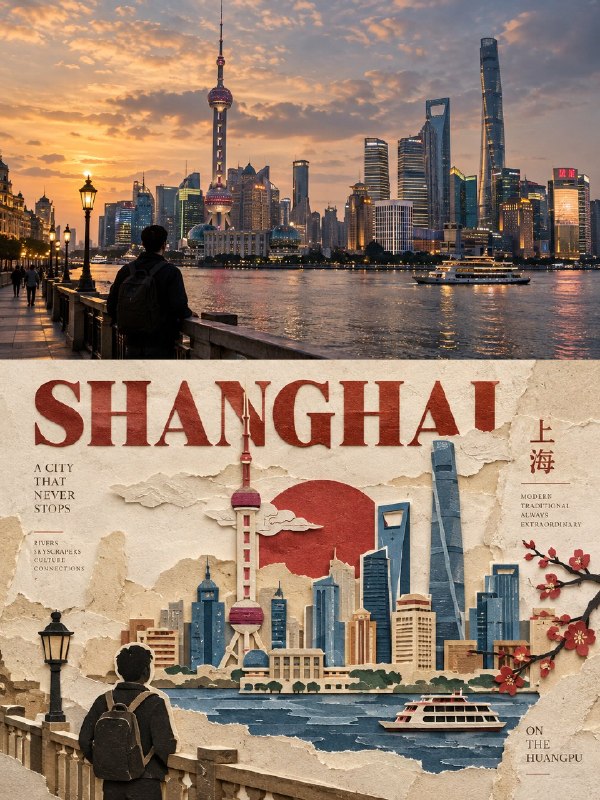
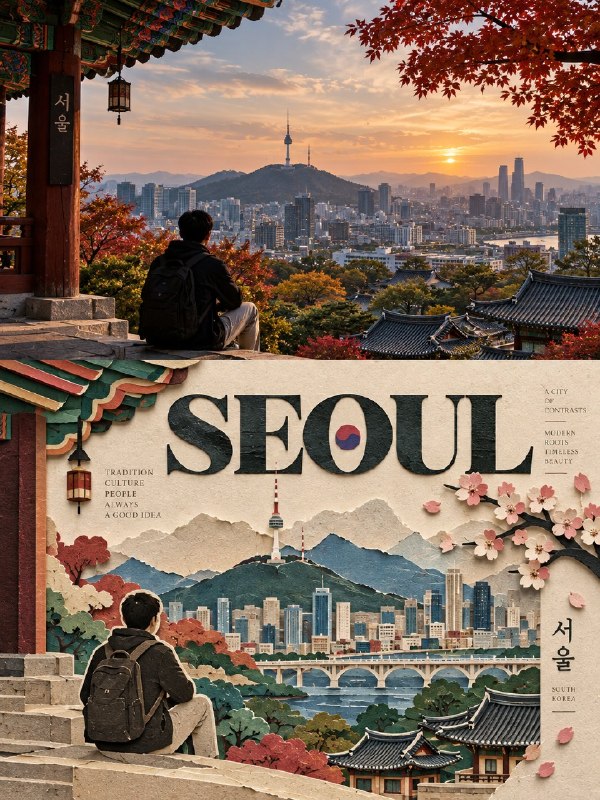
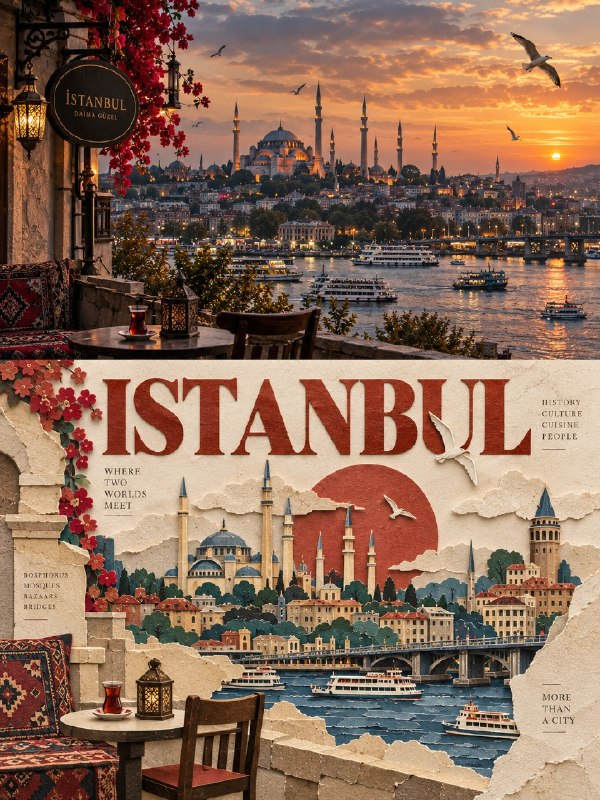
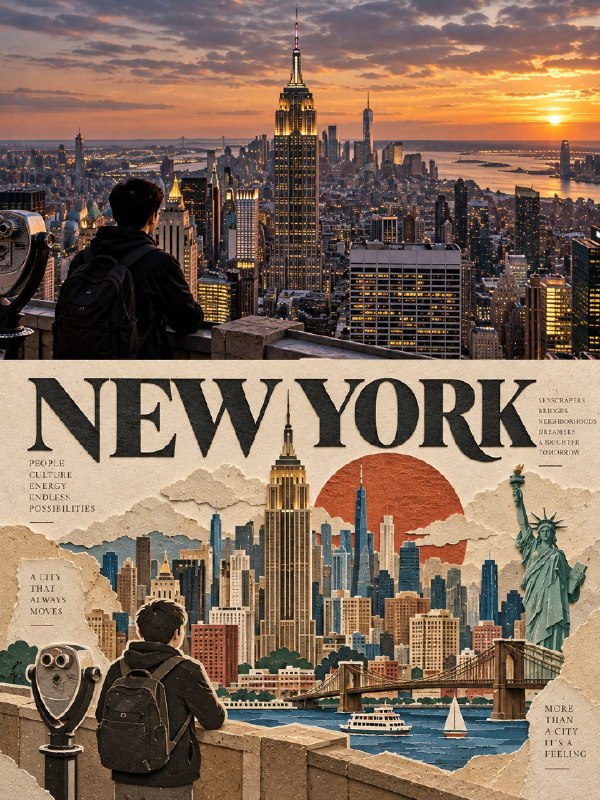
为 [国家 / 地点 / 主题] 创建一张高级 3:4 竖版编辑海报,画面分为两个完全相等的 50% 区域。

仅限文本生成图像。只根据 [国家 / 地点 / 主题] 生成完整作品。不需要参考图或其他视觉输入。

上方 50%——摄影场景

创建一张高度真实、具有电影感的照片,用来表现 [国家 / 地点 / 主题]。

自动判断最具辨识度的主体、姿态、建筑、环境、色彩、光线、纹理、氛围和构图。

为场景加入微妙的高端编辑色彩分级,类似艺术杂志、独立出版物或展览摄影。保留自然光线、真实纹理、可信的色彩和合理的景深。

必要时可以自然延展环境,但要保持主体真实、比例正确且不变形。

下方 50%——分层剪纸艺术

将上方场景中的关键主体重新诠释为精致的分层剪纸 / 手工纸艺构图。

保留其最具辨识度的轮廓、比例、姿态、结构和空间关系,同时简化不必要的细节。

用精心裁切和折叠的纸层构建主体,清晰区分前景、中景和背景。使用尺度对比、整洁对齐、重叠层次和受控留白,创造高级的编辑式构图。

保持一个主要主体作为视觉锚点,只使用少量辅助环境元素。

色彩与材质

自动提取与 [国家 / 地点 / 主题] 相关的最具辨识度色彩,并将其压缩为有限且和谐的纸艺色板。

使用暖象牙色或浅色纸张作为基底,结合少量更强的强调色、较深的结构色调和细微的过渡色。

让材质看起来像高级哑光卡纸,带有细微纸纤维、利落切边、分层厚度和柔和自然的接触阴影。

避免光亮塑料感、过度 3D 效果、霓虹色、浑浊色调和复杂渐变。

编辑排版

创建一个简短的英文主标题,灵感来自主题的身份、地点、动作、情绪或象征意义。

添加 2–4 组小型英文辅助文字,例如地点信息、物体名称、方向词、数字、分类标签、材质描述或一句简短诗意短语。

不要使用任何年份或日期。

使用精致的现代字体,并建立强烈层级。通过让文字与纸张边缘、主体轮廓、几何轴线或留白对齐,把文字融入作品。

在合适的位置混合使用横排、竖排、旋转、贴边对齐和轻微重叠的排版。

主标题可以带有细微的剪纸字符感,而辅助文字应保持纤细、精准、极简和编辑感。

最终美学

创建以下元素的无缝结合:

真实摄影 × 手工分层纸艺 × 精致编辑排版 × 高级材质设计。

最终海报应具有触感、优雅、当代、平衡、精致和艺术指导感,像来自高端设计杂志或画廊的限量版作品。

严格 3:4 竖版 | 精确 50/50 分割 | 纯文本生成 | 高级编辑设计 | 无需参考图。
英文提示词
Create one premium 3:4 vertical editorial poster for [COUNTRY / LOCATION / SUBJECT], divided into two exactly equal 50% sections.

TEXT-TO-IMAGE GENERATION ONLY. Generate the complete artwork from [COUNTRY / LOCATION / SUBJECT] alone. No reference image or additional visual input is required.

TOP 50% -PHOTOGRAPHIC SCENE

Create a highly realistic, cinematic photograph representing [COUNTRY / LOCATION / SUBJECT].

Automatically determine the most recognizable subject, pose, architecture, environment, colors, lighting, textures, atmosphere, and composition.

Give the scene a subtle high-end editorial color grade, similar to an art magazine, independent publication, or exhibition photograph. Preserve natural lighting, realistic textures, authentic colors, and believable depth.

The environment may be naturally extended where appropriate, but keep the main subject realistic, correctly proportioned, and undistorted.

BOTTOM 50% - LAYERED PAPER-CUT ART

Reinterpret the key subject from the upper scene as a refined layered paper-cut / handcrafted paper-art composition.

Preserve its most recognizable silhouette, proportions, pose, structure, and spatial relationships, while simplifying unnecessary details.

Build the subject using carefully cut and folded paper layers with clear foreground, midground, and background separation. Use scale contrast, clean alignment, overlapping layers, and controlled negative space to create a sophisticated editorial composition.

Keep one primary subject as the visual anchor and use only a few supporting environmental elements.

COLOR & MATERIAL

Automatically extract the most distinctive colors associated with [COUNTRY / LOCATION / SUBJECT] and reduce them into a limited, harmonious paper-art palette.

Use warm ivory or light paper as the base, combined with a few stronger accent colors, darker structural tones, and subtle transitional shades.

Make the material resemble premium matte cardstock, with fine paper fibers, crisp cut edges, layered thickness, and soft natural contact shadows.

Avoid glossy plastic, excessive 3D effects, neon colors, muddy tones, and complex gradients.

EDITORIAL TYPOGRAPHY

Create one short main English title inspired by the subject's identity, location, action, emotion, or symbolism.

Add 2–4 small groups of supporting English text, such as location details, object names, directional words, numbers, classification labels, material descriptions, or a short poetic phrase.

Do not use any year or date.

Use refined modern typography with a strong hierarchy. Integrate the text into the artwork by aligning it with paper edges, subject contours, geometric axes, or negative space.

Use a mixture of horizontal, vertical, rotated, edge-aligned, and subtly overlapping typography where appropriate.

The main title may have a subtle paper-cut character, while supporting text should remain thin, precise, minimal, and editorial.

FINAL AESTHETIC

Create a seamless combination of:

realistic photography × handcrafted layered paper art × sophisticated editorial typography × premium material design.

The final poster should feel tactile, elegant, contemporary, balanced, refined, and art-directed, like a limited-edition piece from a high-end design magazine or gallery.

STRICT 3:4 VERTICAL | EXACT 50/50 SPLIT | TEXT-ONLY GENERATION | PREMIUM EDITORIAL DESIGN | NO REFERENCE IMAGE REQUIRED.